
Whale Sharks
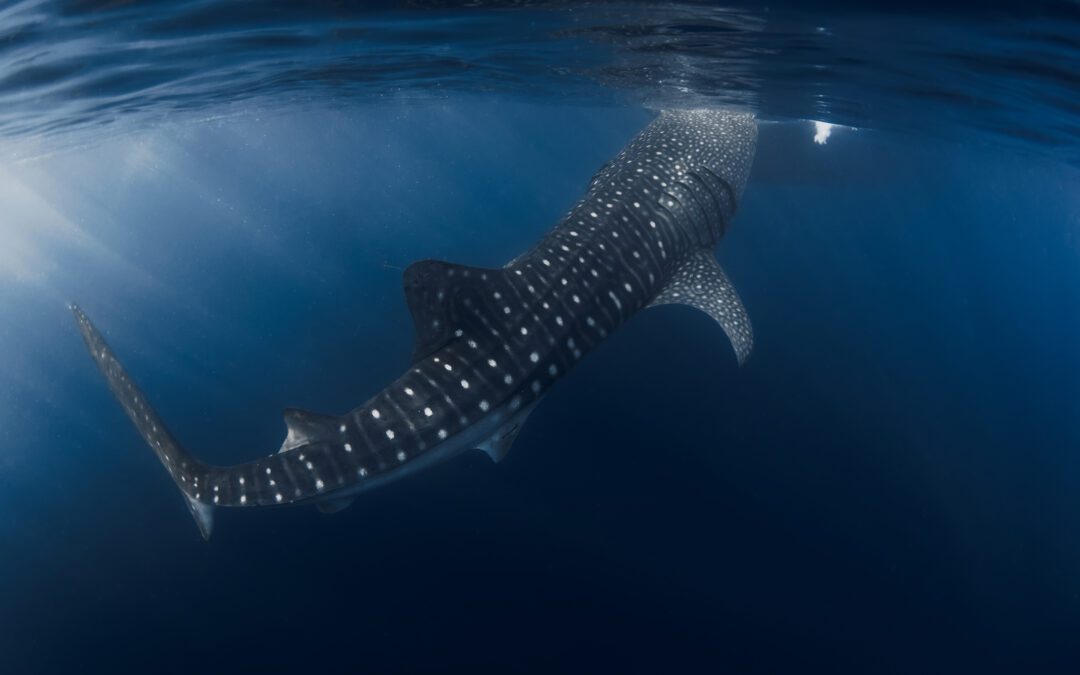
Everybody loves whale sharks! Everyone from the novice diver to the experienced instructor wants to see a whale shark up close. In the recent years, we also noticed that many travellers have it on their travel bucket list. During our countless dives to Sail Rock, we have seen many school of whale sharks. Each time it happens, we continue to be in awe when one casually swims above us. This gentle giant is by far the most adored fish in the Thai diving community.
Whale sharks are pretty remarkable. They are the biggest fish in the sea and can measure 5-12 meters long which is about the size of a large SUV and up to the length of a school bus. They have an estimated average lifetime of 70 years. A whale shark prefers warm waters. They can be seen in the tropical seas of Mexico, Honduras, Western Australia, Belize, Maldives, Philippines and of course, Thailand.
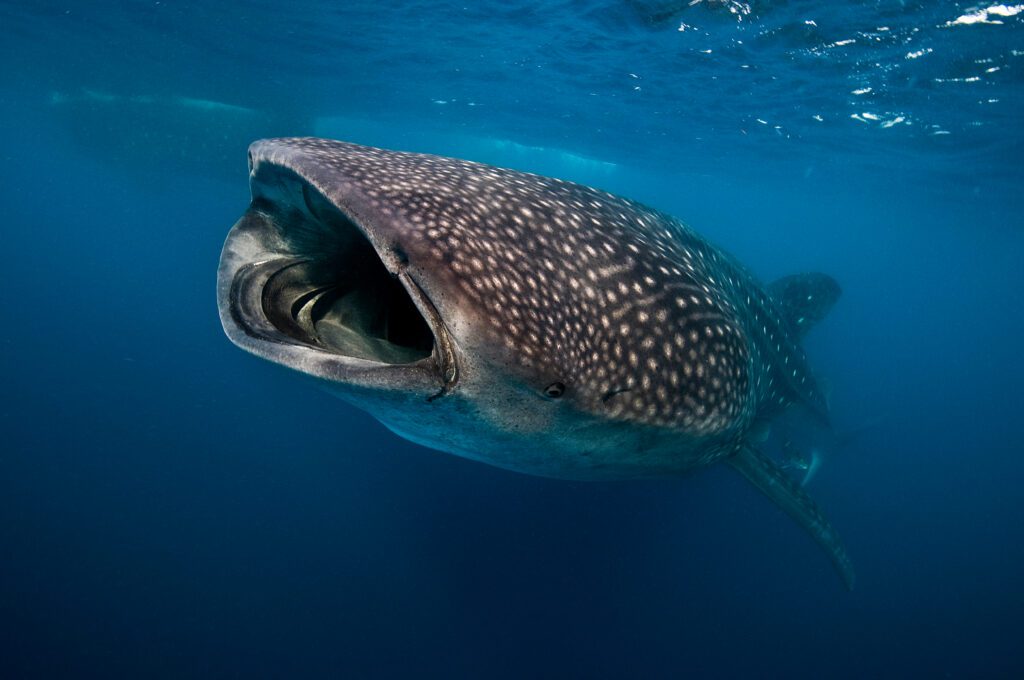
Although they carry both names, they are sharks, not whales. They are a fish and not a mammal. Despite being part of the shark family, the whale sharks are harmless to humans. They are filter feeders. They swim with their mouth open to sieve (eat) plankton through their gills. They also eat squid, krill, and small fish. Whale sharks do have about 3,000 tiny teeth but they don’t use them.
It is not commonly known but a whale shark is considered endangered and are a protected species under international law. According to 2016 data, there are about 7,100 whale sharks in the wild. While being illegal, whale sharks are hunted for several reasons: the oil from their livers is used to make fish oil supplements, the meat and fins is used by restaurants to make the scandalous Chinese shark fin soup and the skin is sold to manufacturers to make bags. Furthermore, whale sharks are increasingly becoming the target to the practice of “finning”, where the fin of a live whale shark is sliced off and then left in the sea to die. There were also reports that whale sharks have been hunted in Thai waters near Phuket by Indonesian fishing boats. This was reported to all relevant government departments including the Thai department of fisheries and an appeal to prevent the hunting of whale sharks in Thai waters has been made.
When Can I See Whale Sharks
It’s hard to tell. Some months, we have seen them 10 times while other months maybe once or twice. Unfortunately there are no guarantee of seeing a whale shark or any other species. The ocean is so vast and a whale shark can migrate from one feeding area to the next. In the last 2 years, we have noticed an increase in whale shark sightings at Sail Rock during our daily dives. It is important to view scuba diving like walking through the jungle or doing an African safari and not like going to the zoo or the aquarium.
Scuba diving is a unique experience each and every time. Some divers were lucky enough to see whale sharks during their PADI Open Water Course and even during their Discover Scuba Diving Program. The only sure way to get that surreal experience of swimming next to a whale shark is to dive regularly with us at Sail Rock.
Have you seen a whale shark before? Are you interested in scuba diving? Tell us in the comment box below.


Hello
We are staying in Koh Phangan for new year. My son has his advanced open water Paddi diving and would like to further his certificates.
Can he also dive with sharks early January ?
Are you able to assist ?
Thank you.
Hi Juliette,
Yes, we can assist your son and he could do the next level course which is the Rescue Diver Course. Whale Shark season normally start from April/May.
Please feel free to contact me direct on Whatsapp +66617656357
Kind Regards,
Francois